Polaris Pro XP Vehicle Lift Guide
Safely lift your Polaris Pro XP or RZR XP using the AGM Manual Jack Sport. Tested on a real vehicle with real trail repairs.
Estimated Read Time: 2 minutes
Quick Answers
★★★★★ Preferred Rear Lift: Rear trailing arm
★★★★☆ Alternate Rear: Lower radius rod
★★★★☆ Alternate Rear: Rear chassis tube
★★★★☆ Alternate Rear (Combo Hook): Side chassis tube
★★★★★ Preferred Front Lift: Front lower control arm
★★★★☆ Alternate Front (Combo Hook): Front side chassis tube
Avoid: Unsupported plastic panels, unstable lift points, lifting with the vehicle able to roll.
You're in the Right Place If...
-
You have a flat tire on your Polaris Pro XP.
-
You want the safest lift points.
-
You're using an AGM Manual Jack Sport.
-
You want to avoid damaging suspension or chassis components.
-
You want to get back on the trail quickly.
Flat Tire Repair
-
If using hand tools, loosen the lug nuts before lifting.
-
Lift from the preferred lift point.
-
Place a secondary support under the vehicle (cooler, toolbox, spare tire, rock, or log).
-
Remove the lug nuts, catching each one if possible.
-
Clean any lug nut dropped in dirt before reinstalling.
-
Install the replacement wheel.
-
Start every lug nut by hand.
-
Tighten in a star pattern.
-
Torque to the manufacturer's specification when available.
Rear Lift — Preferred

Best Lift Point
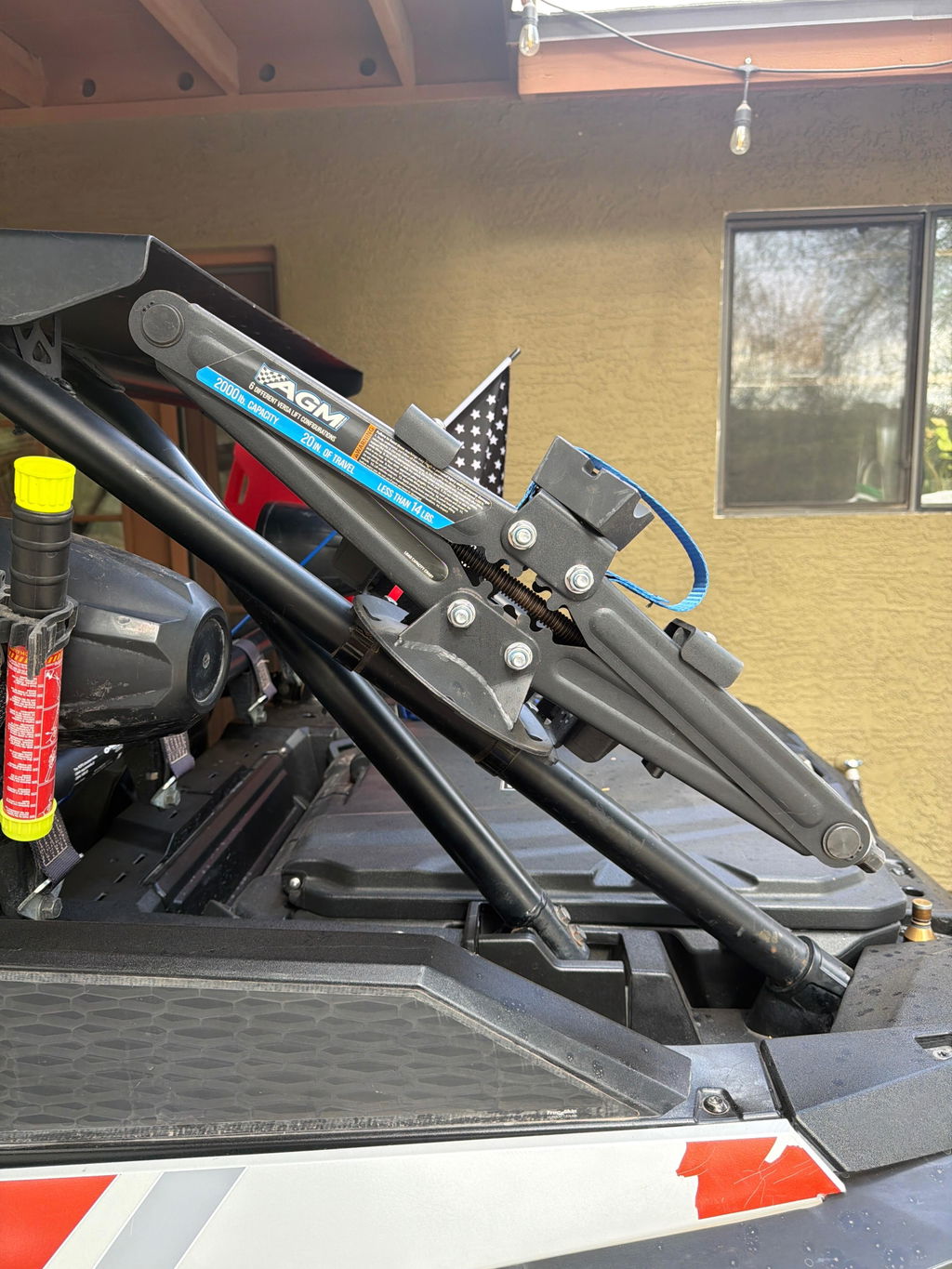
Rear trailing arm beneath the shock.
Why We Use It
-
Lifts the wheel without cycling through full suspension travel.
-
Faster tire changes.
-
Two points of contact create an extremely stable lift.
-
Jack body braces against the spring for additional stability.
Watch Out
-
Position the jack directly under the arm.
-
Make sure the jack contacts both the trailing arm and spring before lifting.
Trail Tip
This is the fastest and most stable rear lift point on the Pro XP.
Rear Lift — Alternate
Photo
Best Lift Point
Lower radius rod (before the bend).
Why We Use It
-
Good option when the trailing arm is obstructed.
Watch Out
-
Because this lift is in line with the vehicle, place the transmission in Park and chock a tire before lifting.
Photo
Alternate Lift Point
Rear chassis tube.
Why We Use It
-
Provides another usable lift location when suspension access is limited.
Watch Out
-
If you run out of jack travel before the tire leaves the ground, lower the vehicle, raise the jack collar one position, and lift again. As the suspension settles, the vehicle sits slightly higher, allowing additional lift.
Photo
Combo Hook Alternate
Side chassis tube.
Why We Use It
-
Excellent option when equipped with the AGM Combo Hook.
-
Secure engagement inside the chassis tube.
Watch Out
-
Follow the same two-stage lift procedure if additional height is needed.
Front Lift — Preferred
Photo
Best Lift Point
Front lower control arm at the flat plate section.
Why We Use It
-
Flatter lifting angle than the round tube.
-
More stable lifting geometry.
-
Keeps the jack aligned with the suspension.
Watch Out
-
Shake the vehicle lightly before removing the wheel to confirm stability.
-
Place the transmission in Park and chock a tire.
Front Lift — Alternate
Photo
Best Lift Point
Front side chassis tube using the AGM Combo Hook.
Why We Use It
-
Useful when suspension access is limited.
-
Secure engagement inside the chassis tube.
Watch Out
-
Confirm the Combo Hook is fully seated before lifting.
Common Mistakes
-
Lifting from unsupported plastic panels.
-
Forgetting to chock a tire during inline lifts.
-
Starting lug nuts with an impact.
-
Tightening lug nuts in a circle instead of a star pattern.
-
Working under a vehicle supported only by a jack.
Before You Crawl Under
-
Move the vehicle off the trail whenever possible.
-
Park on flat, stable ground.
-
Place the transmission in Park.
-
Chock a tire whenever there is any chance the vehicle could roll.
-
Always use a secondary support if any part of your body will be beneath the vehicle.
Why We Chose These Lift Points
These lift points were selected because they provide the most stable lifting geometry while minimizing suspension movement. Whenever possible, the AGM Manual Jack Sport uses two points of contact to improve stability and make trail repairs quicker and safer.
Questions We Hear Most
Can I lift from the radius rod?
Yes. It's a good alternate lift point when the trailing arm isn't accessible.
Why tighten lug nuts in a star pattern?
A star pattern helps seat the wheel evenly against the brake rotor and reduces the chance of the wheel loosening after the repair.
What if I drop a lug nut in the dirt?
Clean it thoroughly before reinstalling to prevent thread damage.
What if the jack runs out of travel?
Lower the vehicle, raise the collar one position, and lift again. The narrowed track width often provides the additional height needed.
Do I need to chock a tire?
Always chock a tire when lifting in line with the vehicle or anytime there is a chance it could roll.