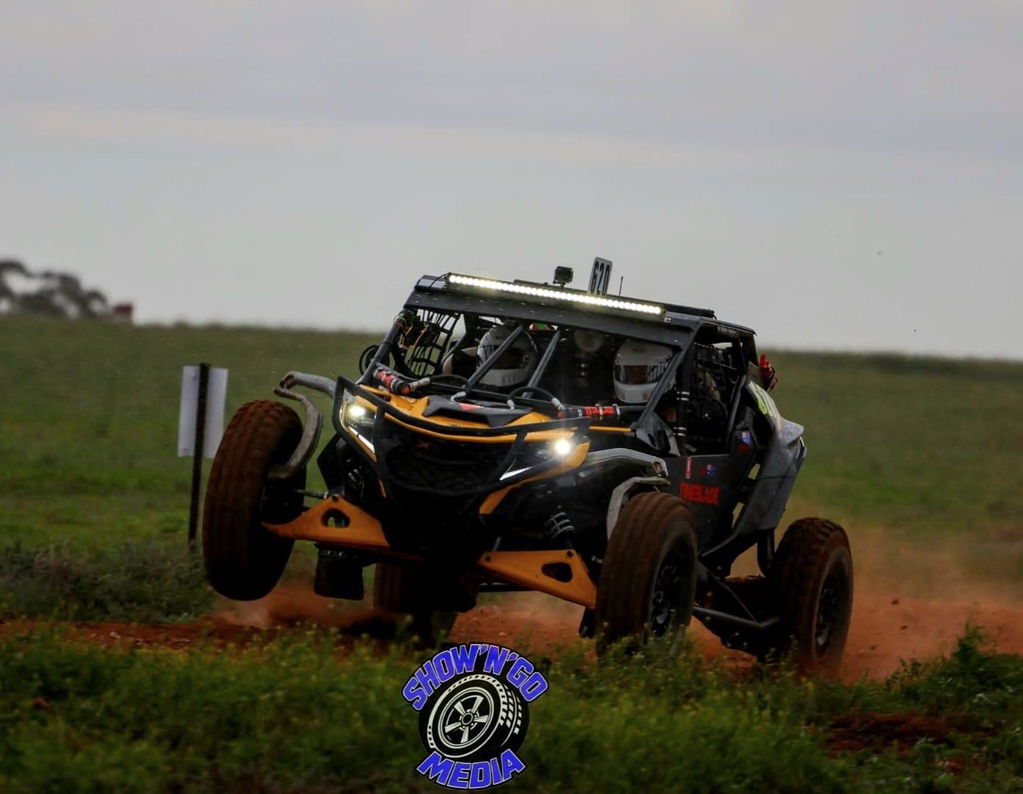
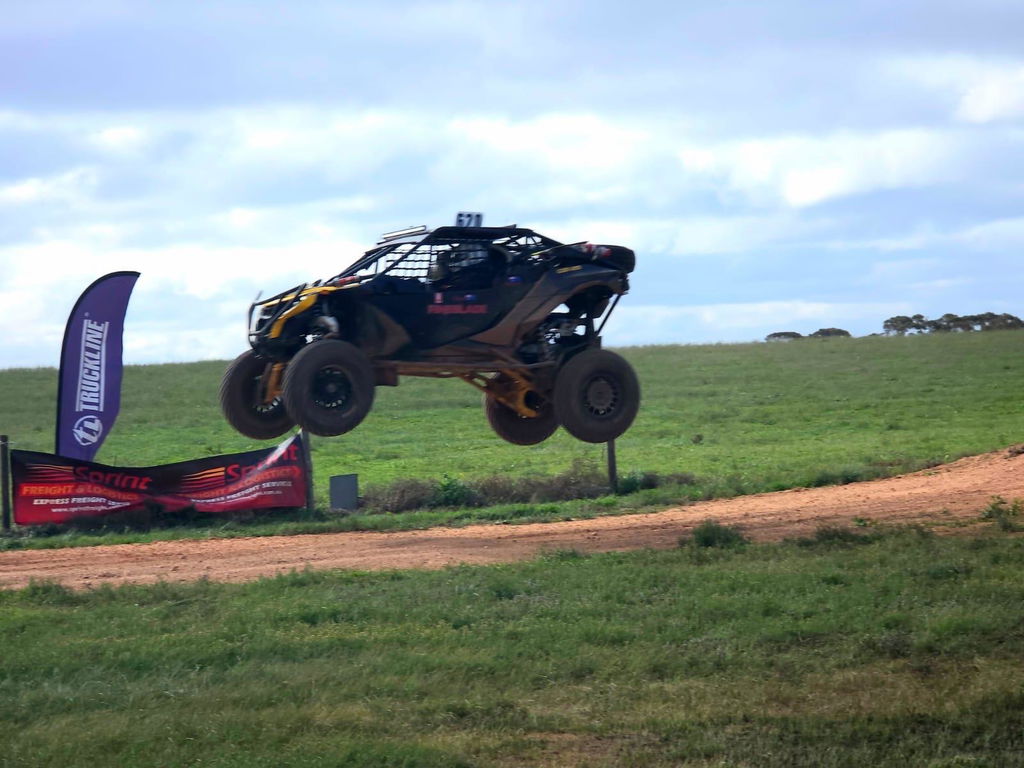
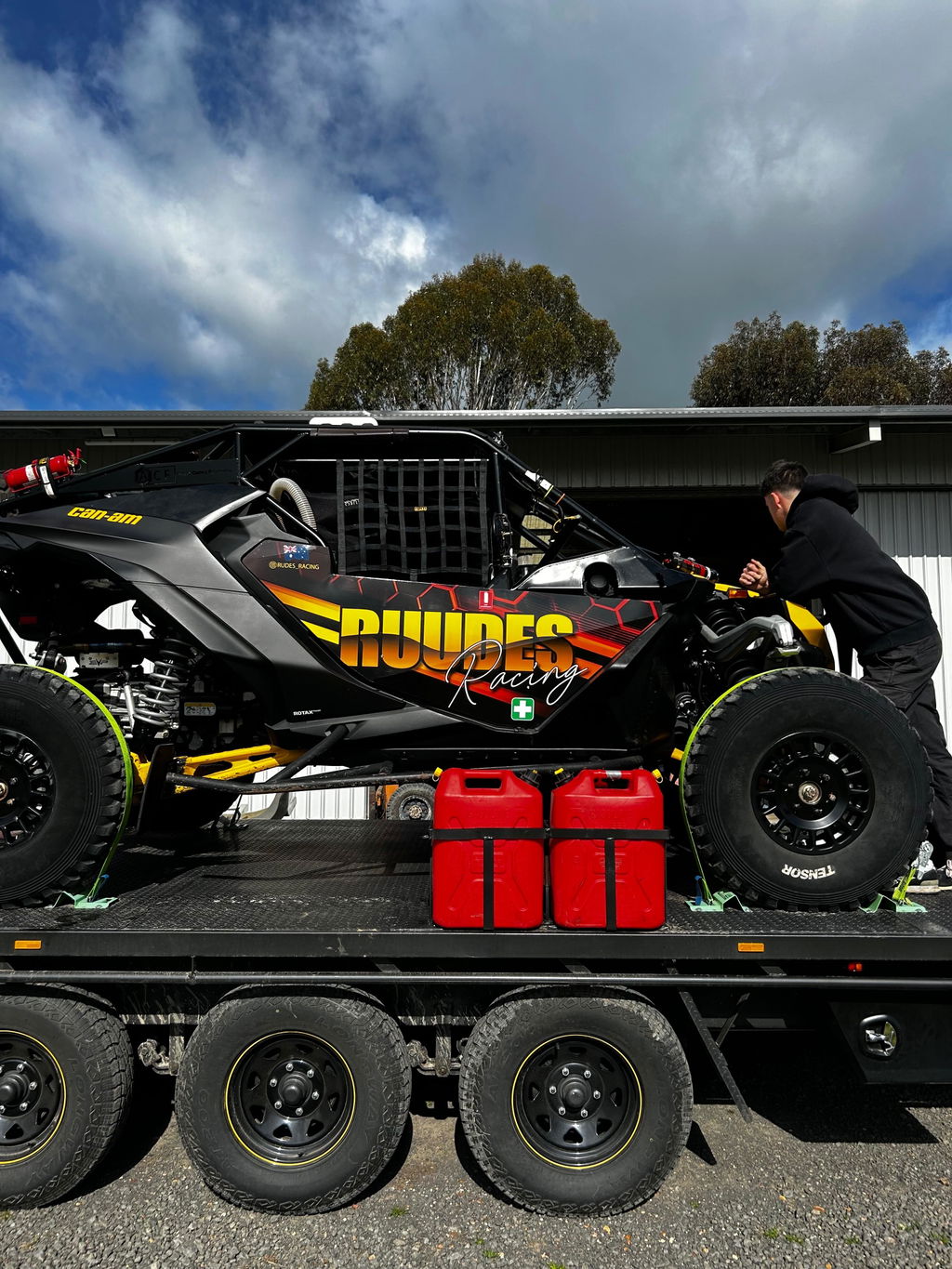
Can-Am Maverick R Vehicle Lift Guide
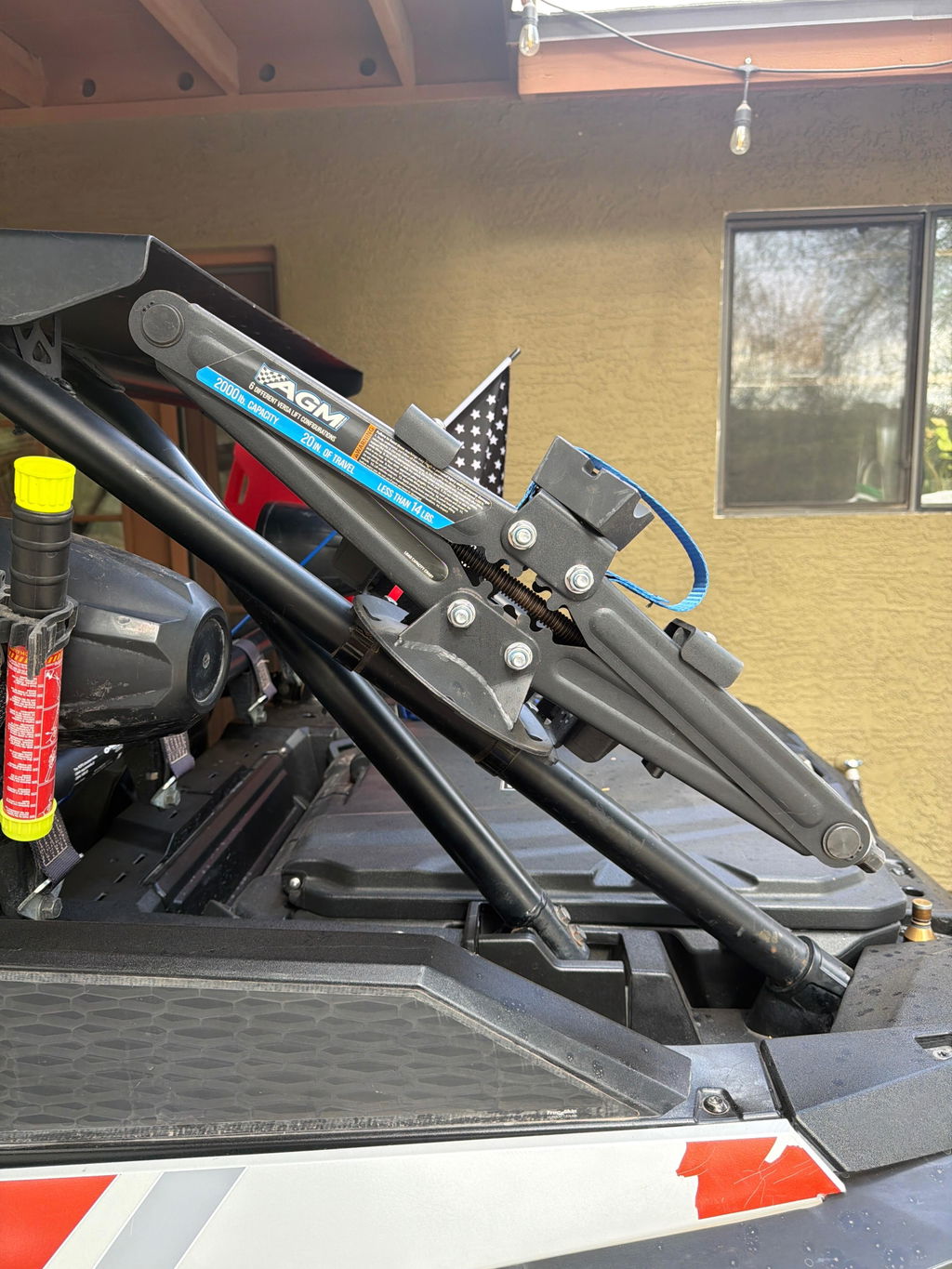
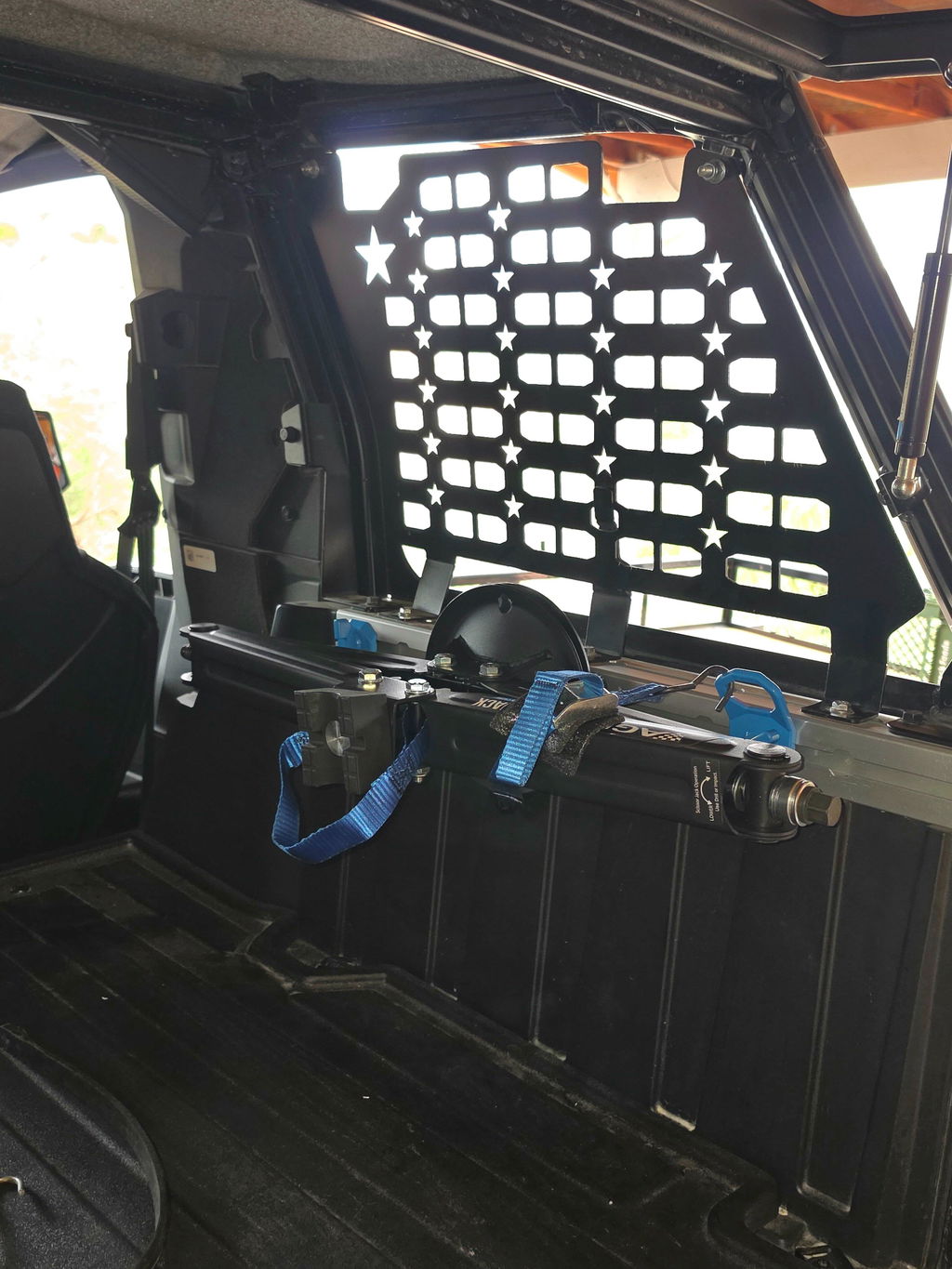
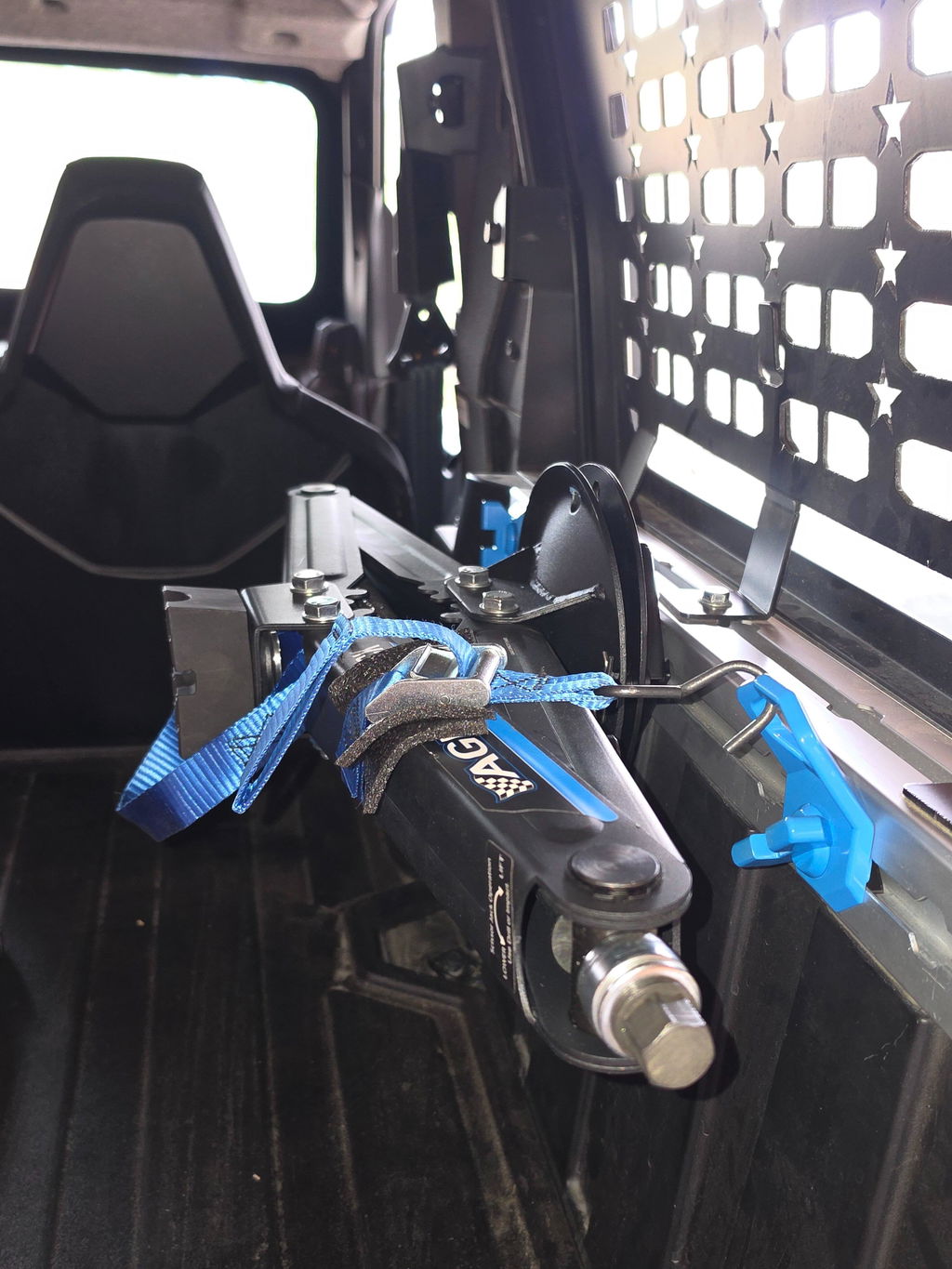
Safely lift your Can-Am Maverick R using the AGM Manual Jack PRO. Tested on a real vehicle during real trail repairs.
Estimated Read Time: 1–2 Minutes
Quick Answers
★★★★★ Preferred Front Lift: Backside of the lower control arm
★★★★★ Preferred Rear Lift: Trailing arm near the shock
★★★★☆ Alternate Front: Front side of the lower control arm
★★★★☆ Alternate Front: Chassis rail beneath the door opening
★★★★☆ Alternate Rear: Rear frame rail
Avoid: Plastic body panels, unsupported skid plates, unstable ground, poorly aligned lift points.
You're in the Right Place If...
• You have a flat tire on a Can-Am Maverick R.
• You want the safest lift points.
• You're using an AGM Manual Jack PRO.
• You want to avoid damaging your vehicle.
• You want to get back on the trail quickly.
Flat Tire Repair
• If using hand tools, loosen the lug nuts before lifting.
• Lift from the preferred lift point.
• Place a cooler, toolbox, spare tire, or similar size solid object under the vehicle as a secondary support.
• Remove the lug nuts, catching each one if possible.
• If a lug nut falls into dirt or sand, clean it before reinstalling so threads are not damaged.
• Install the replacement wheel.
• Start every lug nut by hand.
• Tighten in a star pattern.
• Torque to Can-Am specifications whenever possible. If a torque wrench is not available, tighten with an impact gun to get you home.
Preferred Front Lift


Lift Here
Backside of the lower control arm.
Why
• Preferred front lift point for the AGM Manual Jack PRO.
• Provides excellent stability during the lift.
• Allows the jack to move toward vertical as the suspension extends.
• Reduces the lift height needed to get the tire off the ground.
Watch Out
• Rotate the collar so the hook sits perpendicular to the lifting pad hardware.
• Place the lifting pad underneath the rear portion of the control arm.
• Allow the tie rod to act as a secondary point of contact.
Trail Tip
Start with the base of the jack farther underneath the vehicle than the top so the jack moves toward vertical as the vehicle rises.
Alternate Front Lift

Lift Here
Front side of the lower control arm near the shock centerline.
Why
• Common front lift point on the Maverick R.
• Works with the suspension geometry when positioned correctly.
• Good backup if the preferred front lift point is not accessible.
Watch Out
• Position the jack toward the outside of the vehicle, closer to the tire.
• Rotate the collar to match the angle of the suspension.
• Create a second point of contact between the top of the jack and the upright.
Trail Tip
Use the pivoting base to align the jack with the arm before lifting.
Alternate Front Lift

Lift Here
Chassis rail beneath the door opening.
Why
• Useful when suspension lifting is not practical.
• Strong alternate front lifting location.
• Provides excellent stability when positioned correctly.
Watch Out
• Position the lifting pad beneath the low point of the frame rail.
• Place the base of the jack slightly farther underneath the vehicle.
• Keep the lifting pad centered on the frame.
Trail Tip
Let the jack move toward vertical as the vehicle rises for a more stable chassis lift.
Preferred Rear Lift

Lift Here
Trailing arm near the shock.
Why
• Preferred rear lift point for the AGM Manual Jack PRO.
• Stable rear lifting location.
• Reduces the lift height needed to get the tire off the ground.
• Works well for most rear trail-side repairs.
Watch Out
• Position the lifting pad beneath the trailing arm near the shock.
• Push the base of the jack farther underneath the vehicle than the top.
• Use the shock body as a secondary point of contact when possible.
Trail Tip
Allow the jack to move toward vertical as the suspension extends.
Alternate Rear Lift

Lift Here
Rear frame rail between the trailing arm and chassis.
Why
• Good backup if the trailing arm cannot be used.
• Excellent access when suspension components need service.
• Strong alternate rear lifting location.
Watch Out
• Place the jack between the trailing arm and chassis.
• Keep the jack between the muffler and exhaust pipe.
• Allow the frame rail to create a secondary point of contact.
Trail Tip
If more height is needed, lower the jack, raise the adjustment collar, reposition the jack, and lift again.
Need More Lift Height?![]()
Lift Here
Use the same lift point after raising the adjustment collar.
Why
• Long-travel suspension can require additional lift height.
• The Maverick R track width changes as the suspension extends.
• A second lift can provide the extra height needed for the repair.
Watch Out
• Lower the jack completely before adjusting the collar.
• Raise the adjustment collar up the body of the jack before repositioning the jack.
• Confirm the jack is stable before lifting again.
Trail Tip
When lifting from the rear frame rail, save jack travel in case the repair needs more suspension droop later.
Common Mistakes
• Lifting from unsupported skid plate areas.
• Skipping the second point of contact.
• Starting with the jack angled the wrong direction.
• Using all of the jack travel before the repair is complete.
• Starting lug nuts with an impact.
• Crawling under a vehicle supported only by a jack.
Trail Safety Checklist
✓ Move off the trail whenever possible.
✓ Park on level ground.
✓ Vehicle in Park.
✓ Four-wheel drive engaged if needed.
✓ Chock a tire if necessary.
✓ Use a secondary support before putting any part of your body underneath the vehicle.
Questions We Hear Most
Where should I lift a Can-Am Maverick R with a Manual Jack PRO?
For most repairs, use the lower control arms in the front and the trailing arm in the rear.
What is the best front lift point on a Maverick R?
The backside of the lower control arm is the preferred front lift point when using the AGM Manual Jack PRO.
What is the best rear lift point on a Maverick R?
The trailing arm near the shock is the preferred rear lift point for most repairs.
Can I lift a Maverick R from the chassis?
Yes. The front chassis rail and rear frame rail both provide stable alternate lifting locations.
Why should I start the jack at an angle?
Starting with the base farther under the vehicle allows the jack to move toward vertical as the suspension extends.
How do I safely lift a Maverick R on the trail?
Move to flat ground whenever possible, use the recommended lift points, chock a tire, and use a secondary support if you may need to work underneath the vehicle.
Continue Learning
Watch
▶ Watch the Can-Am Maverick R Lift Video
Explore Other Lift Guides
Electric Jack PRO Vehicle Lift Guide
Manual Jack Sport Vehicle Lift Guide
Scissor Jack Vehicle Lift Guide
AGM Jacks For This Vehicle
Learn More
Choosing the Right AGM Trail Jack (Coming Soon)
Premium Off-Road Jacks That Make Recovery Safe and Simple.
Because how you lift it matters.